Showing posts with label American. Show all posts

Monday, September 27

Feeling Folksy

Fall always puts me in the mood for folk art. There is just something about American folk painting that just warms me up from the inside out. Call it nostalgia.

Luna Park circa 1964

Fall also puts me in the mood for a trip to the Big Apple.


Wall Street circa 1964

Vestie Davis was an American folk artist with a fondness New York and New Yorkers.


Outdoor Art Show

Mr. Davis was born in Maryland in 1903 and didn't pick up painting until he was well into his 40's. His bright and busy paintings of his adopted home town quickly gained attention.


Bethesda Fountain circa 1964

They graced the pages of the New Yorker and Newsweek and many of his originals now reside in the permanent collection at the American Folk Art Museum.

Don't you just want to be a part of it? ;)

PS. Sorry for the absence. My life has looked a lot like a Vestie Davis painting lately, busy!

Thursday, June 17

Man Ray's Tragic Muse

Kiki de Montparnasse was Man Ray's model and lover. She was certaintly something. Take a look at this film, shot by Man Ray in the 1920's. You'll see what I mean. (Warning, there is are a few seconds of artistic nudity.)


She was a beautiful, talented mess. A woman not unlike other famous messes of the time. Like Zelda Fitzgerald and Marilyn Monroe, she was on a collision course with life and naturally, she found herself an artist to document it all.

Photo by Man Ray
Circa 1920

While she is portrayed in art as a beautiful and carefree creature (thanks largely to shameless self-promotion), her life was in reality very different. Abandoned by her mother and raised by relatives, Kiki (born Alice Prin) made her own way in the world from a very young age. She worked odd jobs as a girl and became a nude model at age 14 in Paris. There she met the artist known as Man Ray.

Man Ray was born in Pennsylvania. The son of Russian-Jews, his name was changed from Emmanuel Radnitzky to Ray by his family when he was 22. He began his career in the US, married, divorced and moved to Paris after WWI.

When Kiki met Man Ray he had already made the transition towards a new form of expression, created by his friend Duchamp. As a champion of Da Da, Man Ray rejected traditional art. He turned his focus to found objects, photography and shock for shock's sake.

Kiki worked with and loved Man Ray for over half a decade, only to have her heart broken by the artist when he left her for another woman. She went on to become both a dancer and a painter but her career fizzled as war reignited in Europe. Her life turned dark and she died at age 52, broke and addicted.

Man Ray's most famous work, Le Violon d'Ingres features Kiki with her back towards the viewer. Man Ray (who really invented what we now call"photoshopping") superimposed two f-holes on her back, making her curves look like the body of a violin.

Le Violon d'Ingres by Man Ray
circa 1924
The Getty Center, Los Angeles

This work is very telling. It sums up her relationship with Man Ray and sadly, her life. Kiki literally becomes an instrument to be played by men.

There is now a very expensive chain of lingerie boutiques named after Kiki de Montparnasse. And while I'm sure the store's owners found it clever, I think their choice in name is rather sad. Sadder is that the store's website says nothing about where they got their name. The woman, who died young after a life of drugs, burlesque shows and exploitation by bohemian artists is used as an instument again, this time to sell underwear.

Thursday, May 27

Happy Memorial Day

Childe Hassam's Fourth of July, 1916
Metropolitan Museum of Art
(on loan from a private collector)

I know I am a little early. But, I came across this wonderful program and want to shout it from the roof tops. The network of Blue Star Museums is offering free admission to active duty military families this summer, beginning this Monday and ending on Labor Day (Sept 6th.)

There are lots of great museums participating.

Including:
  • MOMA
  • The Met
  • The Whitney
  • The New Mexico Museum Art
  • Lancaster Quilt and Textile Museum
  • The Museum of the Confederacy
  • The National D-Day Memorial
  • The Norman Rockwell Museum
  • Palm Springs Art Museum
  • Colonial Williamsburg

And here in good ole' North Carolina:
  • The Mint Museum of Charlotte
  • Reynolda House Museum of American Art in Winston-Salem

This is a great way to thank the families of those sacrificing so much to protect this nation and bring precious liberty to the world.

Thank a soldier, a sailor or a marine this weekend. Happy Memorial Day!

Monday, April 12

Holy Dress!

Very good reader Wes. Even my resident historian didn't get it at first glance (I know, I was shocked too.) So, enjoy the next 24 seconds with my congratulations:


Since Wes didn't give it away totally I'll let the rest of you stew over my hint (and his comment) for one more day. Translation: that post isn't quite ready, sorry it was a busy, busy weekend.

Now, on a completely different topic. Don't you think this would be a great church dress?

Color Guard Dress by ModCloth

I do. I think you would really blend in if you wore it to Mass at Paris' Sainte Chappell:

Sainte Chappell
Building circa 1248
Image Courtesy of visitDC.com

I'm not kidding, you would practically melt away into the walls. The 13th century floor to ceiling stained glass windows cast colorful shadows in every direction. Walking through the front door of this high-gothic jewel box is like stepping into a gigantic kaleidoscope.

Sainte Chappell
Windows circa the 13th to the 15th centuries
Image courtesy of gothereguide.com

You may not be quite as camouflaged by these modern beauties, created by the talented artists of Laws Stained Glass Studios in Statesville, NC. But, you would definitely coordinate!

New Corinth Baptist Church
Rutledge, TN


First Christian Church
Smithfield, NC

Monday, April 5

Permission to frat

Two summers ago, we packed all of our frattiest clothes and headed off to Cape Cod and Nantucket for our honeymoon (we also went to Boston and Maine, it was an awesome trip full of lots of nerdy historical stuff.) When we rolled up to Cape Cod we were expecting something like this:


So naturally, we were really surprised to find that pretty much everyone looked (and acted) like this:


The Cast of MTV's Jersey Shore

It was NOT fratty. As we sat at dinner one night, clearly out-fratting everyone in the restaurant, we decided that the true home of frattiness is not the exclusive beach towns of Cape Cod, it is the South. (I really don't know why we ever even questioned that fact.)

Here in the South, we strictly adhere to these rules, no matter how hot it may be outside:
  • No white bottoms after labor day. Unless it is made of wool or it is a wedding dress, it is not allowed.
  • No seersucker, eyelet, madras or linen after labor day. This applies to both sexes.
  • No pastel colors on men until the temperature is 65 degrees or until Easter arrives, whichever comes first.
  • I don't really like white shoes, but if I did, there would be no wearing them after labor day.
  • No straw purses or natural fiber on shoes until Easter. That means espadrilles are out (I know, this is a tough one.)
  • You may wear a bathing suit at any point during the year however, your suit and/or cover up cannot be made out of any of the above fabrics mentioned in the first bullet point.
It has been a long winter of rule following and so I am please to announce that today is a day of celebration! The rules are officially off for the next 5 months. I am currently outfitted in both white and linen. Hubby is in pastel. Huckleberry, being a hound, is naturally fratty. We are a hard fratting family.

So, in honor of today, the day after Easter and the Frattiest Day of the Year, I would like to introduce you to Art History's Top Ten Most Fratty:

10) The Gibson Girl


Illustrator Charles Dana Gibson invented female frat when he introduced the quintessential American girl-next-door to the world. Gibson Girls were the female ideal at the turn of century, dominating magazines and the advertising world from the 1890's to the 1910's. They were beautiful and well-mannered while being competitive, athletic and sassy all at the same time. The wore all of the latest fashions and had men wrapped around their fingers.

9) Hamilton's Coca-Cola Girls


Much like Gibson's Girls, Hamilton King's advertisements for the Georgia-born soft drink are as classic as the refreshing drink they advertise. This King ad was circulated in 1912.

8) George Seurat's Sunday Afternoon on the Island of La Grande Jatte, 1886


Hanging out on the Island of La Grande Jatte was the 19th century Parisian equivalent to tailgating. Dress up, get there early, sit, drink and repeat.

7) Anything by Guy Harvey

Rainbow Country by Guy Harvey

Guy Harvey artwork is best displayed on the back of a men's t-shirt, worn with slightly too short khaki shorts and Costa Del Mar glasses.

6) Dogs

That, my boy, is a duck by Ross B. Young

A portrait of your hunting dog makes excellent office/ man room art. (Why yes, we do have a oil painting of a Basset Hound in our house.) Some of my favorite depictions of hunting dogs are by English romantic painter George Stubbs (1724-1806.) Stubbs really set off the trend of sporting dog art, but he is just now gaining recognition as a masterful dog and equine painter, 200+ years after his death.

A Couple of Foxhounds by George Stubbs

5) Marine Art

Sailing Regatta by Catalina Decaire

Where would fratty people be today without the sailboat? Afterall, the sailboat gave birth the frattiest shoe known to man, the Sperry Top-sider.

Marine art has actually been around a long time, making it the most historically fratty on this list. For as long as people have been building ships, artists have been painting them. The Dutch, who were the world's best shipbuilders during the 17th and 18th century, were particularly keen on marine painting.

4) Luncheon of the Boating Party by Pierre- Auguste Renoir, 1881


The French and the American South share many cultural similarities (I'm sure my husband could explain all of the historical reasons behind this, the French connection to the American Civil War yada yada but I'm not going to get into that today.) Being able to slow down and relax like the Boating Party is very fratty.

3) The Official Kentucky Derby Commemorative Poster
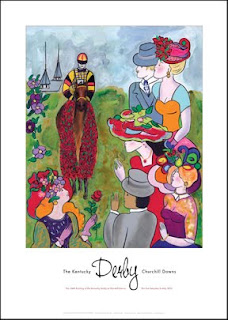

Each year an artist is picked to commemorate the second frattiest day of the year, Kentucky Derby Day. This year, French artist Linda Le Kinff's colorful, Henri Matisse inspired painting was selected as the Official Art of the Kentucky Derby.

2) Bacchus by Caravaggio, 1597
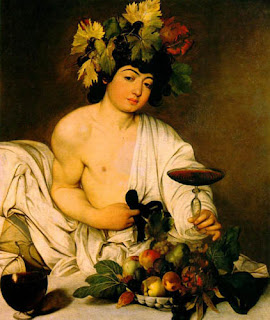
The frat flip! The toga! The beverage offer! As far as fratty art history figures go, Caravaggio's Bacchus is as fratty as they get.

1) SEC Football Stadium Panoramas

Jordan-Hare Stadium, Auburn University

Can you honestly get any frattier than a framed panorama of 87,451 of the frattiest people in America all fratting together? Of course you can't.


Honorable Mention: The Lynch Bench Series by Johnny Lynch


(Just look at it. I couldn't leave this off the list.)
Thursday, April 1

I got nothin

Art is funny. Sometimes it jumps out and grabs you and sometimes, it doesn't. Right now, nothing is grabbing me. Nothing.

So, here are my top five favorite pieces by John Singer Sargent. Maybe if I stare at them long enough it will get the art juices flowing again. I can't rank them, that would be way too hard. So here they are in random order.

Capri
circa 1878, Oil
The Warner Collection of Gulf States Paper Corporation
Tuscaloosa, Alabama

Because I would love to be the woman perched on the ledge--feet up, clapping and letting the southern Italian wind blow through my hair.


Cashmere
circa 1908, Oil
The Bill Gates Collection

Because their faces and robes are gorgeous. And when I say their I really mean "her." It's the same young woman (his niece) in 7 different poses. I know, (sigh), he was so talented.


Villa di Marlia (A Fountain, Lucca Italy)
circa 1910, Watercolor
Museum of Fine Arts, Boston

I love the patina on terracota pots and I love the lemons too. I tried to copy this last year in my own garden. The lemon tree didn't make it but the pot is getting there.


Carnation, Lily, Lily Rose
c. 1885, Oil
The Tate Gallery, London

The way the lanterns glow makes me feel all warm and fuzzy inside. I like how the little girl in the front is focusing on carefully lighting her's too. It's cute.


Bedouins
circa 1905, Watercolor
The Brooklyn Museum, New York

Because Sargent blue beats Titian blue any day of the week. (Yes, I know that some people may think that is crazy talk.)

So, I'll be back when something grabs me, or hits me, or speaks to me or whatever you want to call it. Jenny calls it "lack of inspiration." Maybe I've got a little case of that.

PS. Today is my wonderful husband's birthday. Here is his favorite piece of art:

Dogs Playing Poker by Cassius Coolidge
circa the early 1900's (yes, it really is that old!)

April Fools! He actually has really wonderful taste in art and he is a huge history nerd. Just two of the many reasons why I married him :) Happy Birthday A!

Wednesday, March 10

Rainy day

What a gloomy day! All this rain makes me feel like I'm part of an Ashcan School painting.

Wet Night on the Bowery
by John Sloan, 1911
Delaware Art Museum

The "Ashcan School" was a group of eight American painters in the early 20th century that sought to portray life in an emotionally realistic way- with a gritty urban setting. American realist John Henri was their leader.

Snow in New York
by Robert Henri, 1902
National Gallery of Art, Washington, D.C.

Typical subject matter included gritty scenes of poverty or bleak urban areas. Their work has also been referred to as "New York Realism."

I think this one is exquisite:

Six O'Clock, Winter
by John Sloan, 1912
The Phillips Collection, Washington, D.C.

Wednesday, March 3

Happy B-day!

Linda is my wonderful mother-in-law and today is her birthday! She is an extremely talented quilter and has a great eye for American folk art. So, in honor of her birthday, I thought I would talk about a particular type of folk art that she loves, game boards:

c. 1930
Available from 1st Dibs

Game boards have been lovingly made by American craftsmen for generations. The one pictured above was originally used as a carnival game during the Great Depression. These unusual pieces of folk art aren't exactly being played with at fairs anymore. These days, colorful game boards are used for decoration and are often hung in eye catching groupings of 3 or more.

This fall we had the pleasure of visiting with the very talented game board artist, Diane Allison, in her Boone, NC studio. Diane's hand-painted reproduction game boards have appeared on the pages of Country Living and grace the walls of homes throughout the country.

Gypsy- Penny Pinch by Diane Allison

Her series based on the quilters of Gee's Bend, Alabama is a very unique (and hugely popular) twist on game board art. They are a beautiful juxtaposition of two great American folk arts and some of Linda's favorites!

For more details and beautiful pictures, visit Diane's website.

Tuesday, March 2

Lovely Little Things

Ooohhh these are wonderful. They will make you daydream at your desk.


These charming drawings are by illustrator Julia Denos. I love her nod to old art nouveau illustrations in the redhead's pose. I can practically feel the breeze blowing across my face when I close my eyes. Can't you?

Ms. Denos recently illustrated Tim McGraw's children's book, titled My Little Girl, and has a new book about Audrey Hepburn coming out this year. That will be a must see.

Her blog is lovely. So is her official website.

Thursday, February 18

USA! USA! USA!

I've been really into the Olympics this year. Luckily, my husband is just as excited about them as I am so he hasn't minded me being glued to the TV from 7-11 every night this week. Just in case you're curious... the US is leading in the medal count, with 14 total. 5 are gold. Yay!

All of the USA! chanting has had me thinking about this patriotic series of paintings by Boston born impressionist Frederick Childe Hassam. Childe Hassam (pronounced like "child") studied in both Boston and France before settling in New York City in 1889. He and his wife traveled to and from Europe on several occasions during the early 1900's but ended up back in his beloved Manhattan at the start of WWI. (1 & 2 ) In 1916, the fiercely patriotic German-hating painter began his famed "flag series." He painted a total of 30 flag paintings, all featuring New York City draped in red, white and blue.

Fourth of July, 1916
Metropolitan Museum of Art
(on loan from a private collector)


Allies Day, May 1917
National Gallery of Art
Washington, D.C.


Victory Day, May 1919
American Academy of Arts and Letters
New York, New York

The Met created an excellent website to accompany their huge 2004 exhibit of Hassam's work. The exhibit may be gone but their fabulous website dedicated to it is still up and it is definitely worth a look. Their interactive site for children is also wonderful. I don't have kids and I'm not a teacher but I can't get enough it!

1) FrederickChildeHassam.org, Biography
2) Metropolitan Muesuem of Art, Childe Hassam's Life Chronology

Tuesday, January 19

The Cradle of Liberty

I have the Bay State on my mind today.

Historic Map of Boston
The University of Texas Map Collection

Samuel Adams is one of my favorite historical figures and I love this portrait of him pointing at the Massachusetts Charter:

Samuel Adams
by John Singleton Copley c. 1772
Museum of Fine Arts, Boston, Massachusetts

He looks very confident and I like how intensely he has his fist wrapped around the papers in his right hand. It looks like he just pounded on the table yelling loudly, "Among the natural rights of the Colonists are these: First, a right to life; Secondly, to liberty; Thirdly, to property; together with the right to support and defend them in the best manner they can."

Statue of Samuel Adams at Faneuil Hall
By Anne Whitney, 1876


Boston is home to an extraordinary collection of statues and paintings of America's founders. Sam Adams' portrait painted by John Singleton Copley resides in the Museum of Fine Arts and is truly a national treasure. So is this one, also by Copley:

Paul Revere
by John Singleton Copley c. 1768-1770
Museum of Fine Arts, Boston, Massachusetts

Copely was a friend of fellow Boston artist Gilbert Stuart. He even sat for Stuart, which is think is so cool:

John Singleton Copley
Painted by Gilbert Stuart c.1784
National Portrait Gallery, London, England

Together the pair really cornered the market on portraits of American founders and presidents and we owe them a great deal of thanks. They captured American history with paint and gave us great faces to put with great names.

(PS. It's a bit ironic because Copley was kind of a Loyalist...but that's a lesson for another day.)

Tuesday, January 12

STUART!!!!

No, not that Stuart!

I'm actually talking about Gilbert Stuart, the most famous portrait artist in American history. He painted anyone who was anybody around the time of America's founding, including US Presidents John Adams, Thomas Jefferson, James Madison and James Monroe. In fact, you probably see his Lansdowne Portrait of George Washington every day.

$1.00 Bill
George Washington's Portrait by Gilbert Stuart

In his lifetime, he completed over 1000 of portraits of politicians, socialites and powerful figures in American business and industry. People like Sally Foster Otis, who was married to the City of Boston's 3rd mayor, well-known federalist lawyer Harrison Gray Otis.

Mrs. Harrison Gray Otis by Gilbert Stuart C. 1809
Reynolda House Museum of American Art
Winston-Salem, NC

Doesn't she look like she stepped out of a Jane Austen's Emma? Her hair, dress and jewelry show that she was a bit of an avante-garde woman. The hellenic style empire waist dress and gold arm cuff indicate that she was clearly aware of the transition from Georgian to Regency style happening across the pond. (Let me throw some credit the artist's way on this-- Stuart studied painting in Britain and would have been well aware of emerging English fashions. It is possible that he dressed Mrs. Otis for her sitting.)

But other than her clothes, this painting is pretty ordinary. You are probably starting wondering why I'm even writing about it. Why not focus on Stuart's portrait of first lady Martha Washington or Daniel Webster? They are definitely more notable historical figures that's for sure.

Well, look closer:


I have seen this painting twice in person and the first time I didn't notice it at all. Do you see it? Look again:


Yes, that's a child's face!

I know, it is really kind of creepy. I keep expecting the kid to emerge out of a puff of smoke and yell boo! If had this hanging over my mantle it would totally freak me out every time I walked by it.

This portrait actually started out as a painting of a mother and child. However, for some reason that abruptly changed mid sitting and Stuart painted over the little boy's face. When the painting hung in the Otis' home, the little face would not have been visible. But age and layers of settling paint have allowed a little boy to peek out of the canvas.

Isn't it amazing the secrets paintings slowly reveal over time!